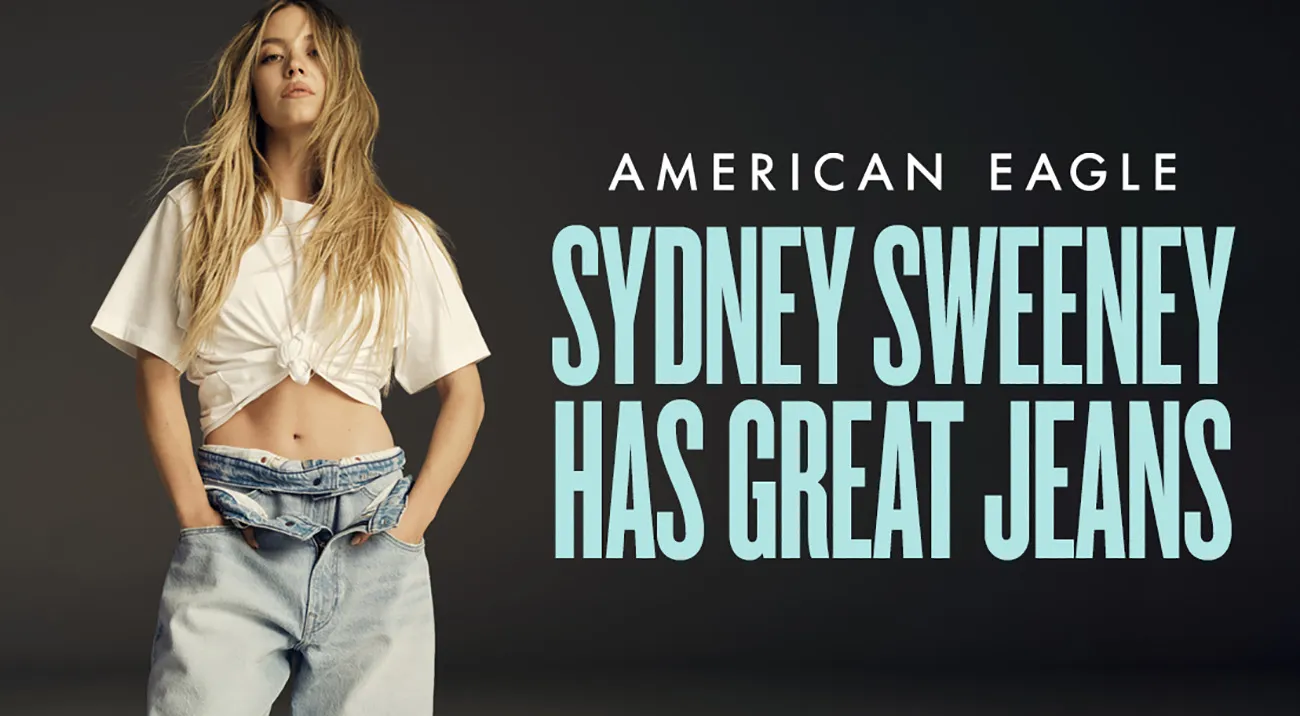
Sydney Sweeney
Has Great Jeans.
A deconstructive analysis of American Eagle’s 2025 denim campaign, examining how a high-profile advertising launch became a reputational controversy and how the brand managed its response.
Built on Denim.
Rooted in Youth Culture.
Founded in 1977, American Eagle has developed a recognizable position in American casualwear through accessible denim, youthful branding, and an emphasis on individuality.
Its brand identity is built around confidence, authenticity, and self-expression, appealing primarily to Gen Z and Millennial consumers.
Competing with Levi’s, Gap, H&M, and Abercrombie & Fitch, American Eagle has maintained strong recognition in the denim category through product innovation, accessible pricing, and cultural relevance.
BRAND POSITIONINGA leading American denim and apparel brand that makes self-expression accessible through quality, comfort, and individuality.
When a Pun Became a Cultural Flashpoint.
“Great genes.”
The campaign’s wordplay became the center of a national conversation about advertising, representation, and cultural sensitivity.
On July 23, 2025, American Eagle launched its Fall denim campaign featuring actress Sydney Sweeney.
The campaign promoted new denim styles and “The Sydney Jean,” a limited-edition product connected to a charitable initiative.
However, a teaser referencing inherited traits and blue jeans sparked criticism over perceived racial insensitivity and associations with eugenics.
Public reactions were divided. Some audiences criticized the creative execution, while others viewed it as a harmless advertising pun.
American Eagle launches the Sydney Sweeney denim campaign.
The campaign generates viral discussion, media coverage, and public criticism.
American Eagle publishes a statement clarifying the campaign’s intent.
The CEO publicly discusses the campaign and the company’s decision to stand behind it.
Visibility Versus Credibility.
The controversy generated significant media exposure, but the resulting attention raised questions about brand trust, consumer perception, and the long-term implications of cultural polarization.
Historical figures from the 2025 research paper. The share-price movement and sentiment changes should not be interpreted as solely caused by the campaign.
Understanding the Narrative.
The research framework focused on evaluating the extent of the backlash, understanding audience perceptions, and identifying communication approaches that could reduce reputational damage.
Proposed discussions with Gen Z and Millennial consumers to evaluate reactions and test response statements.
Proposed quantitative research measuring brand sentiment, trust, and changes in consumer perception.
Review of reporting from major news outlets and social conversations across digital platforms.
Examination of other brands’ crisis responses and relevant consumer communication trends.
The focus groups and surveys were described as methodology in the academic paper. They are presented here as proposed research rather than completed findings.
Situation Analysis / SWOT
Denim heritage, brand awareness, loyal customers, celebrity partnerships, and advertising innovation.
Controversial messaging, delayed response, and perceived inconsistency with inclusive brand values.
Renewed visibility, transparent communication, and the opportunity to reconnect with consumer expectations.
Political polarization, negative media attention, social amplification, and declining trust.
Restoring Trust.
The central communication goal was to reestablish American Eagle’s credibility while reinforcing authenticity, inclusivity, and self-expression.
These were proposed communication objectives, not achieved campaign results.
One Brand. Three Relationships.
The analysis identified three audience segments with different expectations and emotional connections to American Eagle.
Digitally active, trend-conscious consumers who prioritize self-expression, transparency, and cultural awareness.
Messaging Direction:
Emphasize individuality,
creative freedom,
inclusive representation,
and authenticity.
Consumers with nostalgic relationships to the brand who increasingly consider values and purpose in purchasing decisions.
Messaging Direction:
Reconnect through
familiarity, nostalgia,
personal confidence,
and brand continuity.
Existing customers who associate American Eagle with optimism, comfort, and accessible self-expression.
Messaging Direction:
Reaffirm confidence,
belonging, and
the brand’s
long-standing values.
Current vs. Desired Perception
Politically polarized, culturally insensitive, and perceived as disconnected from its inclusive identity.
Authentic, inclusive, optimistic, confident, and committed to individuality and self-expression.
Confidence. Individuality. Self-Expression.
American Eagle’s original creative platform positioned the campaign as a celebration of personal confidence through denim.
The company’s communication strategy reinforced the campaign’s original intention rather than issuing an apology.
While this approach maintained brand consistency, the analysis found that a more empathetic acknowledgment of audience concerns could have helped reduce reputational tension.
This section evaluates American Eagle’s actual creative platform, not an independently created replacement campaign.
How the Brand Managed Its Message.
The paper evaluated American Eagle’s communication tactics across paid, earned, shared, and owned media.
3D billboards, Times Square, the Las Vegas Sphere, digital advertising, and in-store campaign visuals.
Extensive media coverage, public commentary, and the CEO’s interview with The Wall Street Journal.
Instagram and TikTok posts, public clarification, viral discussions, memes, and audience reactions.
Official website, campaign imagery, brand-controlled messaging, and product storytelling.
The brand maintained its campaign positioning across channels, but its limited acknowledgment of public criticism raised questions about responsiveness and accountability.
Three Decisions Under Scrutiny.
The accompanying presentation examined three decisions that shaped the brand’s response and identified alternative approaches.
American Eagle waited approximately one week before releasing a short Instagram statement clarifying the campaign’s intention.
The response was criticized by some audiences as defensive and insufficiently empathetic.
Respond sooner with a transparent statement acknowledging concerns, explaining creative intent, and reinforcing inclusive brand values.
American Eagle’s CEO publicly defended the campaign, reinforcing confidence in its original creative direction.
Balance confidence with accountability by discussing audience concerns, lessons learned, and future communication practices.
The company continued displaying campaign visuals across billboards, stores, and social media.
Consider pausing or reframing selected executions, highlighting The Sydney Jean initiative and more inclusive storytelling.
What Could Have Been Done Differently?
Respond Earlier
Establish a rapid-response protocol to address emerging controversies before external narratives become dominant.
Lead With Empathy
Acknowledge public concerns while explaining the creative intent behind the campaign.
Strengthen Pre-Launch Testing
Test potentially sensitive language and visuals with diverse audiences before campaign launch.
Connect Messaging to Action
Support inclusive brand positioning through transparent communication, community initiatives, and accountability.
Visibility Is Not the Same as Credibility.
This case study explored how an advertising campaign can generate commercial attention while creating significant reputational challenges.
The analysis reinforced the importance of understanding cultural context, anticipating audience reactions, and ensuring that brand communication reflects the values a company claims to represent.
Skills demonstrated: Crisis Communications, Brand Reputation, Audience Segmentation, Research Strategy, PESO Analysis, Executive Messaging, Media Analysis, and Issues Management.
The Complete American Eagle Case Study.
Explore the original 17-page research paper and six-slide presentation, including brand background, research methodology, SWOT analysis, audience segmentation, message mapping, PESO evaluation, and alternative crisis responses.
VIEW RESEARCH PAPER**Disclaimer: this site was created for educational purposes only and is not affiliated with the brand in any way.