Financial Performance, Corporate Communications & Strategic Decision-Making
Financial Communications | Corporate Reputation | Investor Relations | Business Strategy
Project Overview
The business behind the entertainment.
Netflix has evolved from a DVD rental service into a global entertainment company, expanding beyond traditional streaming into original productions, advertising, live programming, sports, and gaming.
Through three interconnected academic assignments, I examined Netflix’s financial performance, the attempted acquisition of Warner Bros. Discovery, and competitive positioning to understand how business decisions and corporate communications shape investor confidence and public perception.
01
Financial Performance
Earnings, valuation & stakeholders
02
Corporate Decisions
M&A strategy & investor reaction
03
Market Positioning
Competition, stock trends & media
Research Approach
Connecting the numbers to the narrative.
The analysis combined publicly available financial information, corporate disclosures, market comparisons, and business journalism to examine both performance and communications.
Financial Research
2025 Form 10-K, income statements, financial ratios and historical earnings.
Corporate Disclosures
Shareholder letters, earnings communications and acquisition announcements.
Market & Competitive Analysis
Stock trends, analyst recommendations, ownership data and competitor comparisons.
Media Analysis
Reuters, CNBC, The Wall Street Journal and industry publications.
Financial Performance
Strong earnings. Higher expectations.
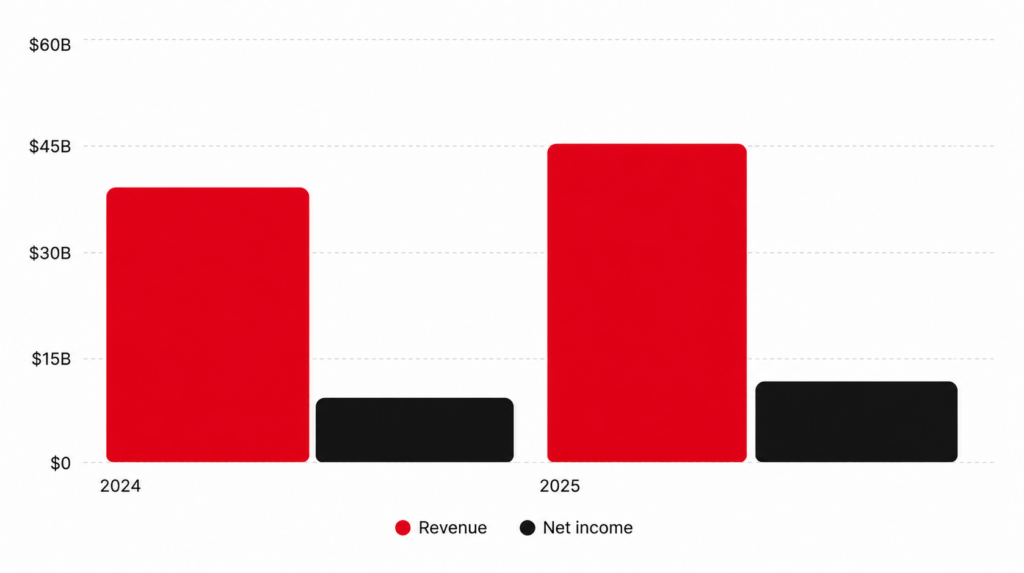
I examined Netflix’s 2025 financial results to understand how revenue growth, profitability, and valuation influenced investor expectations within a highly competitive entertainment industry.
$45.18B
Revenue
+16% YoY
$10.98B
Net Income
+26% YoY
$2.53
Diluted EPS
FY2025
Valuation & Investor Expectations
What does a premium valuation communicate?
37×
Netflix P/E Ratio
FY2025 year-end calculation
16×
Historical Market Benchmark
Comparison used in the assignment
Netflix’s relatively high P/E ratio suggested that investors were pricing in significant future growth. However, those expectations also created greater sensitivity to strategic uncertainty, competition, and acquisition-related risks.
My assessment distinguished between Netflix’s strong operating performance and the risks associated with purchasing a stock at a premium valuation.
Stakeholder Communications
One company. Different stakeholders.
My analysis of Netflix’s January 2026 shareholder letter evaluated how management communicated business performance to investors, employees, and consumers.
| Audience | Messaging focus | Assessment |
| Investors | Growth, earnings, expansion, shareholder value | Most directly addressed |
| Consumers | Content, product innovation, engagement | Discussed primarily through business performance |
| Employees | Limited workforce-related messaging | Least directly addressed |
Management Messaging vs. Media Coverage
NETFLIX’S NARRATIVE
Financial momentum, advertising expansion, membership growth, and long-term strategic opportunities.
BUSINESS MEDIA’S NARRATIVE
Stock volatility, acquisition uncertainty, competitive pressure, and potential financial exposure.
KEY FINDING
Strong financial performance does not automatically translate into positive investor sentiment. Corporate messaging and independent media coverage can frame the same results in significantly different ways.
The Warner Bros. Discovery Acquisition Attempt
When ambition meets financial discipline.
The second stage examined Netflix’s attempted acquisition of Warner Bros. Discovery and how the resulting bidding contest with Paramount Skydance influenced corporate strategy, financial markets, and investor confidence.
INITIAL PROPOSED ENTERPRISE VALUE
$82.7B
December 2025
Netflix positioned the transaction as an opportunity to strengthen its content portfolio, expand its intellectual property, and generate long-term shareholder value. However, competing bids increased the financial stakes and raised questions about the strategic value of the deal.
Acquisition Timeline
Stock Market Reaction
What did investors think?
Despite Netflix’s strong financial results, uncertainty surrounding the acquisition coincided with negative market sentiment.
My analysis examined how investors reacted to the potential financial exposure of the deal and how the company’s decision to withdraw was followed by a stock recovery.
During the bidding process
Investor concerns surrounding valuation, transaction size, and strategic uncertainty.
Following Netflix’s withdrawal
A stock recovery accompanied a reassessment of Netflix’s financial discipline.
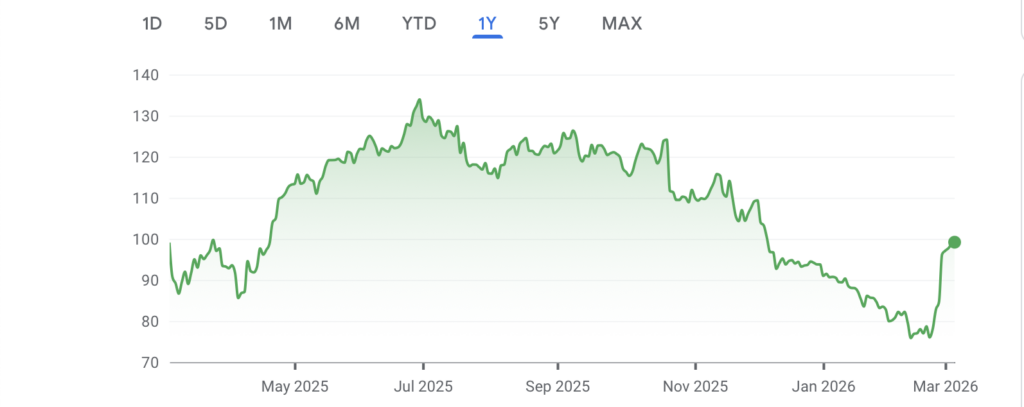
The case demonstrated that investor confidence depends not only on earnings, but also on how leadership evaluates opportunities, allocates capital, and manages strategic risk.
Executive Communications & Reputation
Consistency in corporate messaging.
Across the acquisition process, Netflix’s leadership emphasized strategic value, financial certainty, and shareholder interests.
Management’s Position
The transaction needed to support long-term value creation and remain financially attractive.
External Concerns
Media coverage highlighted regulatory scrutiny, financial risk, industry consolidation, and potential consequences for consumers and competition.
Netflix’s decision to withdraw remained consistent with its emphasis on shareholder value, illustrating the relationship between executive messaging, strategic decisions, and corporate credibility.
KEY FINDING
Corporate credibility is shaped not only by the opportunities a company pursues, but also by its willingness to reconsider decisions when they no longer align with its financial priorities.
The 12-Month Business Story
Looking beyond the headlines.
The final stage synthesized Netflix’s financial performance, stock trajectory, ownership structure, analyst recommendations, competitive positioning, and business and marketing media coverage into a corporate analysis presentation.
The objective was to understand the company’s economic story over 12 months and evaluate how business developments influenced its market position and public narrative.
Ownership & Analyst Sentiment
Institutional Ownership
Examined major shareholders, including Vanguard, BlackRock, FMR, State Street, and Geode.
Analyst Recommendations
Reviewed buy/hold recommendations and expectations for continued growth
Shareholder Activity
Examined insider transactions and ownership patterns as part of the investor landscape.
Netflix vs. NASDAQ
Understanding the Stock Story
I compared Netflix’s stock performance with the NASDAQ to distinguish broader market movements from company-specific investor concerns.
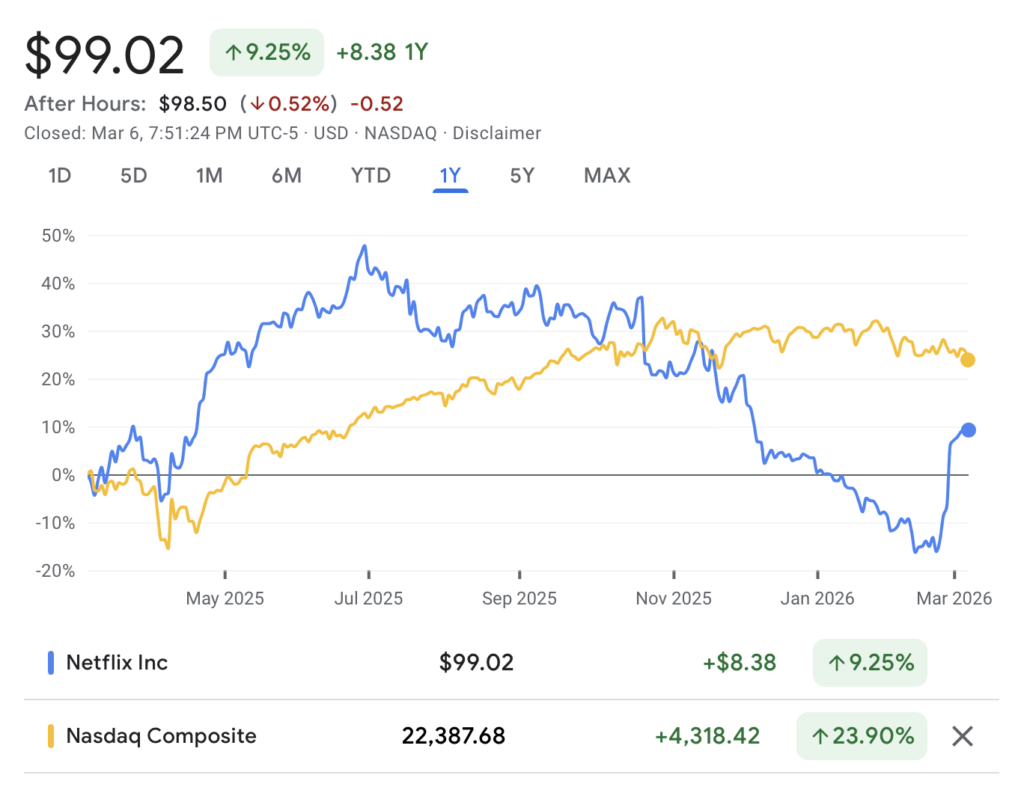
The comparison highlighted periods when Netflix outperformed the broader market, followed by a divergence as company-specific concerns, including acquisition uncertainty, influenced investor sentiment.
This analysis reinforced the importance of interpreting stock performance within both the broader economic environment and the company’s individual circumstances.
Competitive Financial Benchmarking
How does Netflix compare?
I evaluated Netflix alongside Disney, Paramount, and Warner Bros. Discovery to better understand its financial and competitive position.
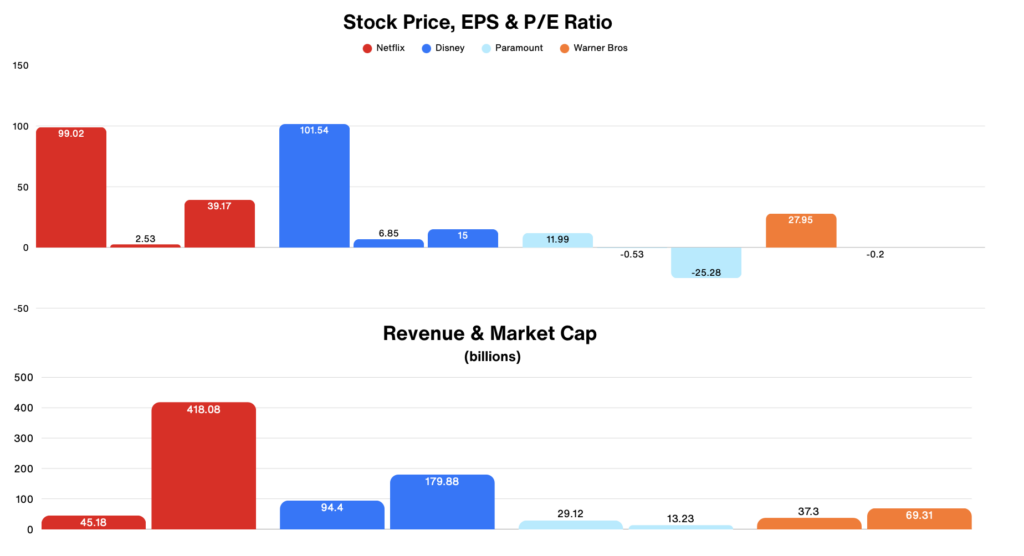
These comparisons demonstrated the different financial structures, valuations, and business models operating within the broader entertainment and technology sectors.
Macroeconomic & Industry Context
The forces shaping Netflix’s business.
Industry Competition
Competition extends beyond streaming to gaming, social media, and other forms of entertainment.
Advertising & Profitability
Growing attention to monetization, advertising revenue, and sustainable business performance.
Industry Consolidation
Acquisition activity introduces financial, competitive, and regulatory considerations.
Changing Consumer Behavior
Live programming, sports, gaming, and digital experiences are reshaping entertainment engagement.
These industry-level forces helped contextualize Netflix’s financial and strategic decisions. Broader macroeconomic conditions were part of the course framework, although the submitted work focused more extensively on company and industry developments than on a separate quantitative macroeconomic analysis.
Business Media vs. Marketing Media
BUSINESS MEDIA
Corporate transactions, competition, profitability, stock performance, and investor concerns.
MARKETING MEDIA
Original content, live events, sports, gaming, advertising, and audience engagement.
KEY FINDING
Understanding corporate reputation requires looking beyond an organization’s own communications and considering the financial, competitive, and cultural environment in which it operates.
A company’s financial results tell one part of its story. How it makes decisions, communicates them, and earns stakeholder confidence tells the rest.
Across the three assignments, I examined Netflix through financial, strategic, and communications perspectives. The project strengthened my ability to interpret financial information, evaluate executive messaging, analyze media narratives, and connect corporate decisions to stakeholder perceptions.
**Disclaimer: this site was created for educational purposes only and is not affiliated with the brand in any way.