buddylingo
by duolingo
Marketing Strategy | Product Innovation | Market Research | Go-to-Market Planning
01. Project Overview
Buddylingo is a proposed feature within the Duolingo app designed to make language learning more interactive, practical, and personalized.
The concept connects language learners with native speakers through real-time messaging and video calls, creating opportunities to practice communication skills beyond traditional language-learning exercises.
Developed as a comprehensive marketing plan, the project explores:
- the market opportunity,
- competitive landscape,
- target audiences,
- product positioning,
- promotional strategy,
- financial feasibility,
- and performance measurement necessary to introduce a new digital service.
02. Identifying the Opportunity
While language-learning applications have made education more accessible, learning vocabulary and completing exercises do not always translate into confidence when communicating in real-world situations.
Buddylingo lets users practice conversations with native speakers, receive immediate language support, and gain culturally relevant insights tailored to their needs.
The concept particularly addresses travelers navigating unfamiliar destinations, professionals communicating across international markets, and learners seeking more personalized language practice.
Buddylingo was developed around the opportunity to connect digital language education with authentic human interaction
03. Market Research & Competitive Landscape
The project began with an analysis of the global language-learning industry, examining market growth, digital learning adoption, international travel, and the increasing demand for multilingual communication.
International Travel
The recovery of global tourism created opportunities for practical, on-demand language assistance.
Digital Education
The growing adoption of mobile learning platforms demonstrated demand for flexible and accessible educational experiences.
Globalization
International business and cross-cultural interactions have increased the relevance of language proficiency in professional and personal settings.
COMPETITIVE ANALYSIS: The research examined three competitors offering approaches to language learning and translation
Babbel: A structured, subscription-based learning platform offering self-paced lessons and live group instruction.
HelloTalk: A language-exchange platform connecting users with native speakers through social and interactive features.
Google Translate: A free translation service offering immediate linguistic assistance without the same emphasis on structured learning or ongoing human interaction.
The analysis identified an opportunity to position Buddylingo around convenient, real-time communication with native speakers while leveraging Duolingo's established platform and brand recognition.
04. Target Audience & Segmentation
The proposed marketing strategy identified three primary audience segments.
These segments informed Buddylingo’s product positioning, subscription options, promotional channels, and potential partnerships.
Gen Z Travelers
Young travelers seeking accessible, practical language assistance while exploring unfamiliar destinations. Values: convenience, digital accessibility, and authentic cultural experiences.
Corporate Learners
Professionals who regularly interact with international colleagues, customers, or business partners and need flexible language-learning solutions that fit demanding schedules.
Tourists
International travelers interested in communicating more independently, navigating unfamiliar environments, and connecting with local communities.
05. Product Strategy & Value Proposition
The core idea: Learn a language by connecting with the people who speak it.
Buddylingo was designed as an integrated Duolingo feature, not a separate app.
Proposed features
- Real-time messaging with native speakers.
- Live video conversations for pronunciation and conversational practice.
- Personalized language assistance based on individual needs.
- Community forums for sharing experiences, advice, and recommendations.
- Potential expansion into business language sessions, regional dialects, and specialized learning programs.
The strategic advantage centered on combining digital convenience with human interaction, making language learning more relevant to everyday experiences.
06. Pricing & Distribution Strategy
The marketing plan proposes flexible pricing options designed to accommodate different usage patterns.
These proposed tiers were designed to appeal to both occasional travelers and users requiring more consistent language assistance.
Distribution
Duolingo’s existing app, supported by:
- digital marketing
- app store visibility
- strategic partnerships.
Daily Access
- Live chat: $5 per day.
- Video calls: $10 per day.
Vacation Packages
- Three-week package: $70, including unlimited live chat and 10 video calls.
- Four-week package: $100, including unlimited live chat and 20 video calls.
07. Integrated Marketing & Promotional Strategy
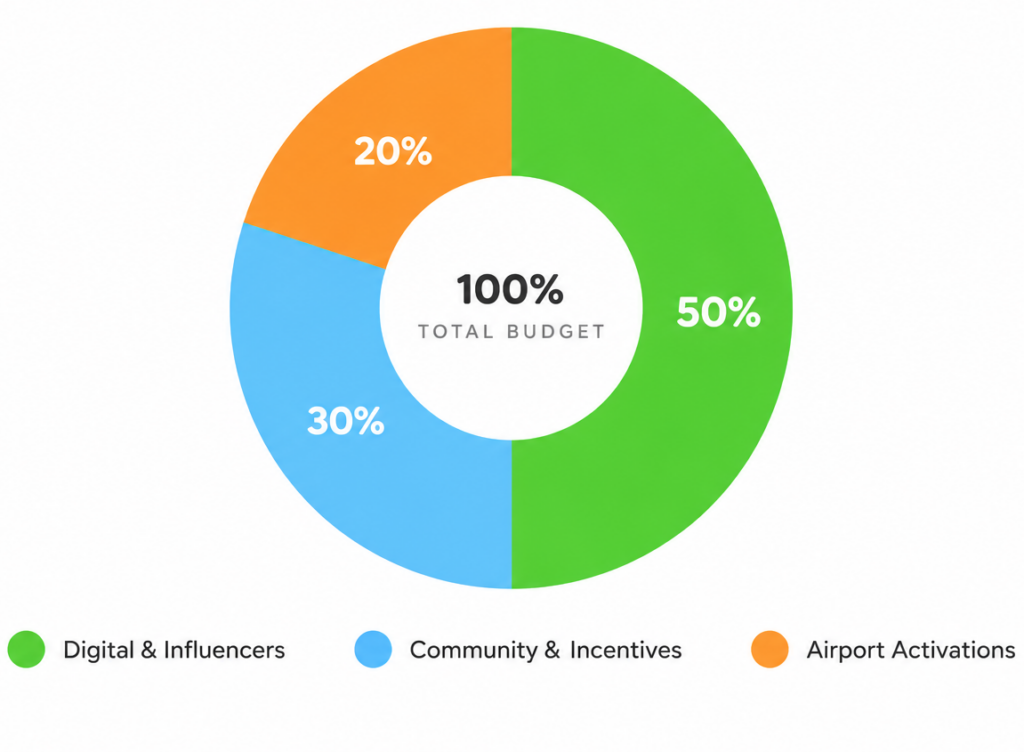
The go-to-market strategy combined digital advertising, influencer partnerships, experiential marketing, and community-building initiatives.
Digital & Influencer Marketing
Introduce Buddylingo through social media campaigns, travel and educational content creators, targeted advertising, and communications to Duolingo’s existing user base.
Airport Activations
Develop interactive pop-up stands and kiosks at major international airports and travel events, allowing travelers to experience the proposed feature through live demonstrations.
#BecomeABuddy Campaign
A community-driven initiative encouraging users to progress from language learners to language mentors.
Designed to encourage continued engagement, strengthen community participation, and create a potential network of language mentors.
Strategic Partnerships
Explore partnerships with airlines, travel agencies, educational institutions, and relevant content creators to reach users in contexts where practical language communication is particularly valuable.
08. Marketing Budget & Financial Planning
The financial plan includes revenue and expense projections across a pre-launch period and two years of operations.
These estimates explore the relationship between customer acquisition, subscription pricing, marketing investment, operational expenses, and potential profitability.
09. Implementation & Performance Measurement
Phased implementation strategy: begin with product development and native-speaker recruitment, then move to promotional activities, geographic expansion, and additional service features.
To evaluate performance, the proposed measurement framework includes:
User acquisition and subscription conversions.
Customer engagement & retention.
Satisfaction surveys and user feedback.
Campaign impressions and click-through rates.
Partnership effectiveness.
Return on marketing investment.
The plan also addresses potential operational risks, including platform stability, pricing sensitivity, user privacy, content moderation, and competition.
10. Project Outcome & Key Takeaways
The final deliverable was a comprehensive, 12-page academic marketing plan proposing a new product extension for Duolingo.
The project brought together market research, audience segmentation, competitive positioning, product innovation, promotional planning, financial forecasting, and performance evaluation into a unified go-to-market proposal.
It was an opportunity to approach marketing from both creative and commercial perspectives, connecting a product idea to the strategic decisions needed to introduce and sustain it in a competitive digital marketplace.
**Disclaimer: this site was created for educational purposes only and is not affiliated with the brand in any way.